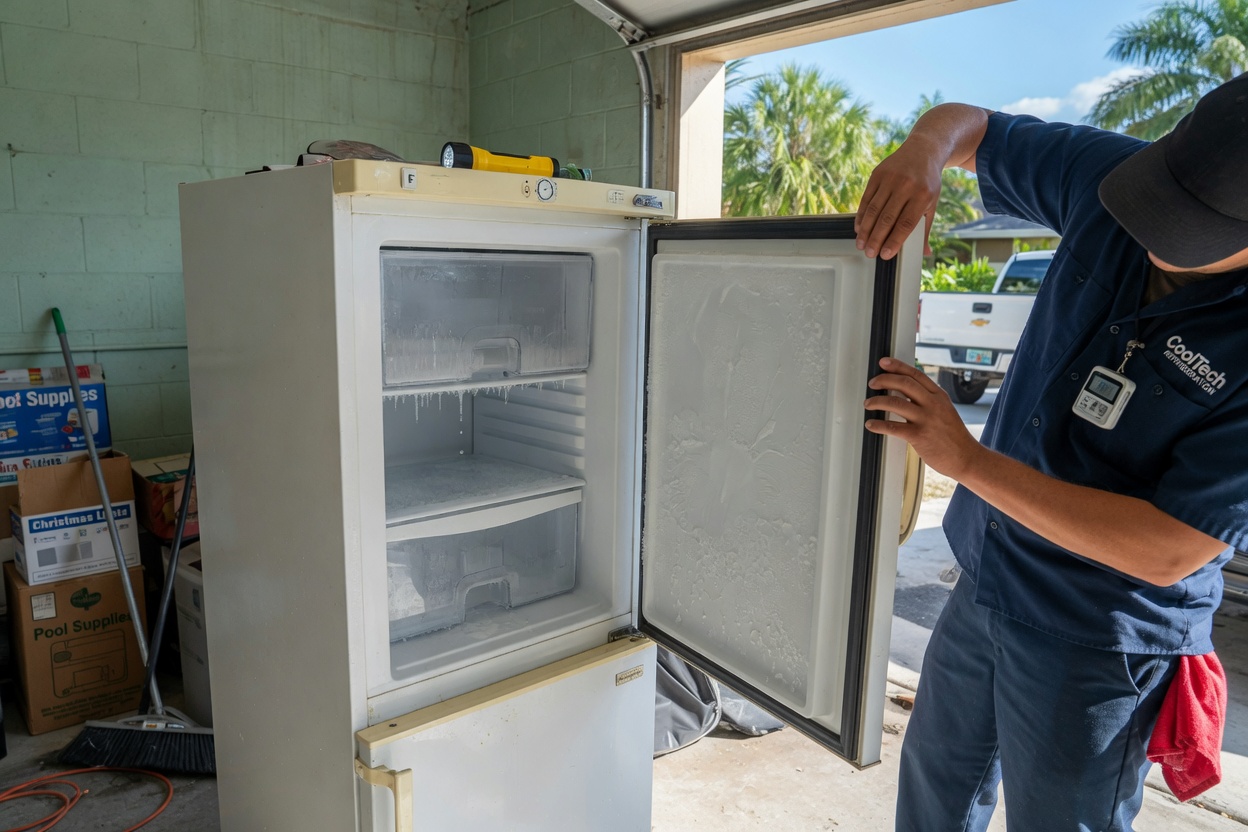
Signs something is wrong
- Food softening or a thermometer above 0°F
- Heavy frost on the walls, ceiling, or door
- Compressor or fan running and never resting
- New squeal, click, or rattle
- Water on the garage floor when the frost finally melts
- Door that will not stay sealed on its own
Before you request a repair
Keep the door closed while you move food into another freezer or a neighbor's unit if temperatures are rising. Check that the gasket meets the cabinet all the way around and that the freezer is not buried in stored boxes with no airflow. Unplug it if you smell burning or the cord and outlet are wet from meltwater.
Garage heat is the local condition
A freezer rated for indoor use will run almost continuously in a closed July garage and may still not hold zero. Killearn, Betton Hills, and Bradfordville houses often keep the extra freezer in the garage because the kitchen is full. That location belongs in the first sentence of the request.
Leave a few inches at the sides and the top. A freezer pushed against stored furniture cannot reject heat. Coils on the outside of some chest freezers also fail when they are boxed in.
Frost is a clue, not a personality
A manual-defrost chest that was never defrosted will ice up until the lid will not close, and then the food thaws under a shell of ice. An upright frost-free that is suddenly a block of ice may have a defrost failure or a door that has been ajar.
Defrost only after the food is safe somewhere else. Do not chip ice with a knife. Punctured liners become leaks, and a leak in a garage freezer is how the compressor gets wet.
Noise versus temperature
A click every few minutes can be a normal relay. A click followed by silence and warm food is a compressor that is not starting. A squeal that arrives with frost is often a fan blade hitting ice. Those are different repairs, and the temperature reading tells them apart.
Put a cheap thermometer in a glass of water in the cabinet if you can do it without a long door opening. The number is better than a hand on the door. Share it when you write.
Food first, then the model tag
If the food is still hard, you have time to be orderly. If it is softening, move it before you photograph the tag. The tag on an upright is usually inside the cabinet or on the back. On a chest it may be on the back or behind the lower grille.
Say how old the frost is, whether the unit is chest or upright, and whether it lives in the garage. We confirm the address is in the current service area before a visit. A request does not reserve a time.
Questions about freezer repair
How cold should a freezer be?
Aim for 0°F. Food that is soft, icy on the outside, and warm in the middle has already started to thaw and should not be refrozen for quality or safety.
Should I unplug a freezer to melt the frost?
Only after the food is moved. A closed door and a fan on the room will melt frost. Towels on the garage floor matter, because the meltwater volume surprises people.
The compressor is hot and the food is warm. Has it failed?
The shell runs hot in normal operation, especially in a Florida garage. Warm food plus a compressor that clicks and never runs is the more worrying pattern. Describe both.
Can I put a garage freezer in the house to test it?
If you can move it empty, upright, and without lying it down, a cooler room is a fair test of an ambient-heat problem. Do not lay a freezer on its side to get it through a door.